New Book Excerpts #7: Ant nest hoverflies
Here’s one final excerpt from my NEW BOOK. This time, Microdon hoverflies, the curious larvae of which live within ant nests, tucking into the brood. Again, superbly illustrated by Carim Nahaboo. The book is published by Laurence King Publishers, part of the Orion Group.
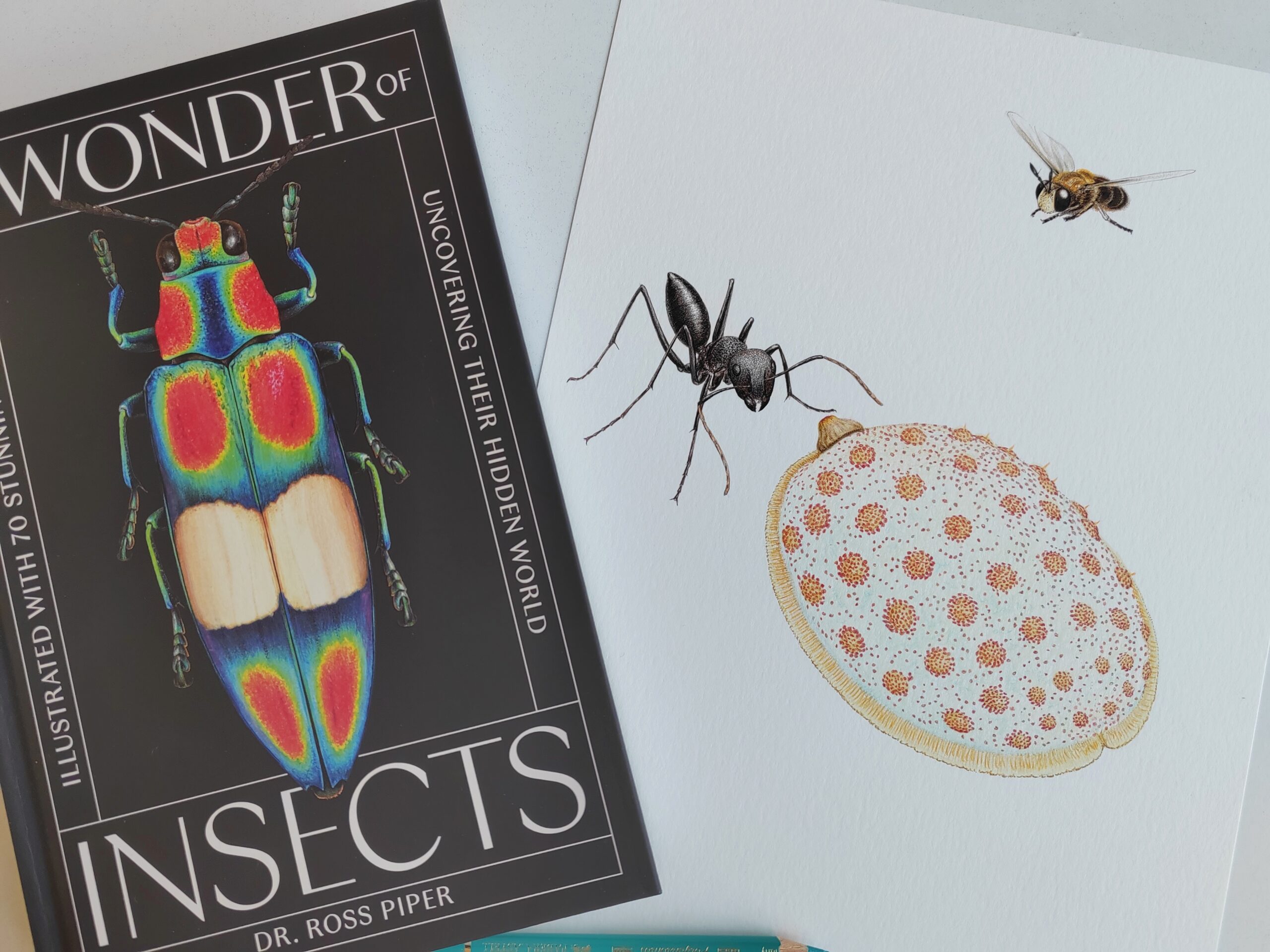
“As adults hoverflies are delicate animals of the air. Perhaps the most accomplished flying animals there have ever been, they fly at speed, some species migrating huge distances as well as hovering with extreme precision, darting in any direction between nectar sources. In the warmer months, it’s always well worth spending some time watching these insects to appreciate their phenomenal ability in the air.
In stark contrast to the delicate, nectar- and sap-sipping adults, the larvae of many species are predators, dispatching a whole range of prey. Among the most bizarre of these are the larvae of Microdon hoverflies – strange, domed animals that look like miniature tanks and reside only within ant nests. Their appearance is so strange that they were initially thought to be molluscs or scale insects.
Ant nests might be well defended, but they offer a stable climate and a smorgasbord of food, from plump larvae and pupae to the rich pickings of refuse heaps, all of which has attracted a great many unsavoury characters, including the likes of Microdon. Trundling around the dark confines of the nest they plunder the ant’s brood. The mature larvae of certain Microdon species have been observed consuming as many as 10 ant larvae in a 30 minute period, which is quite some appetite. The fly larva would clamber on top of the helpless ant larva, pierce it with its mouthparts and suck it dry. Sometimes, attendant worker ants would come along and drag their young sister away from the marauder. Normally though, the ants would just leave the Microdon larva to it, even picking up the discarded husk of one of its sisters are carrying them to the refuse pile. What the younger Microdon larvae eat is unknown, but it has been suggested they might consume the droplets of liquid food produced by the ant larvae, which is what adult worker ants do…”
Leave a Reply