New Book Excerpts #6: Scorpion Beetle
Today’s amuse bouche from my NEW BOOK is a vignette of a very rare longhorn beetle, Onychocerus albitarsis, which has an intriguing defence. Few specimens of this remarkable beetle are known, but it has been been found at the Los Amigos Station in southern Peru, a site I’ve visited several times. I have yet see it. This is another stunning illustration by Carim Nahaboo. The book is published by Laurence King Publishers, part of the Orion Group.
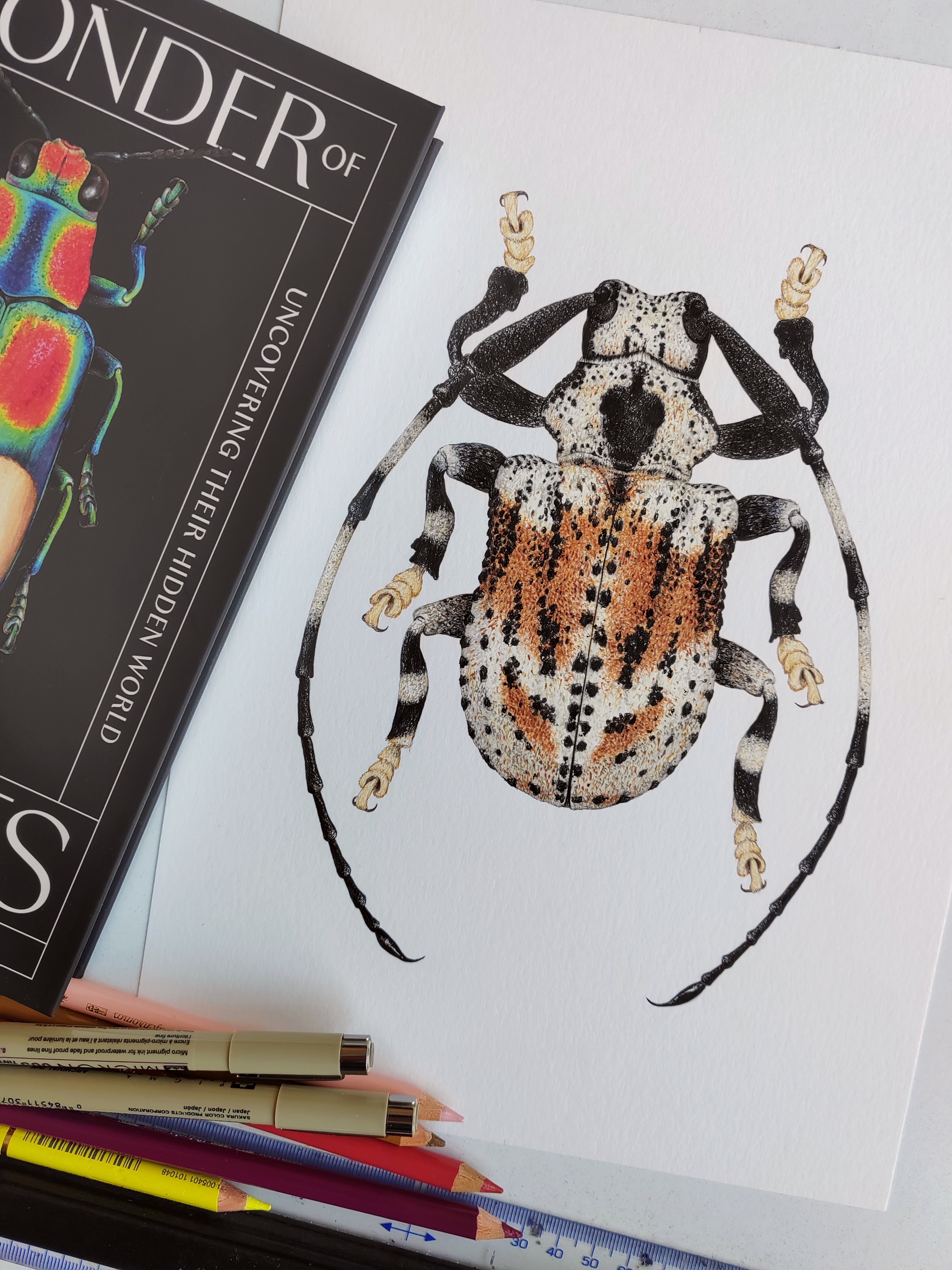
“This very rare longhorn is a real aberration as it is the only known beetle that can sting. Stings are the specialty of scorpions and Hymenoptera – the group of insects that includes wasps, ants and bees. What’s really interesting is that this beetle stings with its antennae, both of which are extremely mobile and tipped with sharp points that can jabbed into an unsuspecting enemy with some force. In humans at least the sting of this beetle causes pain and inflammation, but I can imagine that any bird or primate getting jabbed in the face by one of these stingers would drop the beetle with some haste before moving swiftly on.
It’s not exactly clear what the sting is injecting to cause this inflammation. Is it a venom produced by the beetle, or something assimilated from the hostplants of the larvae as they develop in wood? Some of the relatives of this beetle have been reared from trees that contain irritating saps or resins. An answer to this question may be some time in coming as it’s a very rarely-seen species, represented by a relatively small number of specimens in museum collections. It is known from Bolivia, Brazil, Paraguay and Peru, but precious little else is known of its biology, particularly the host trees in which the larvae develop.”
The original article that describes this remarkable adaptation is here.
Leave a Reply